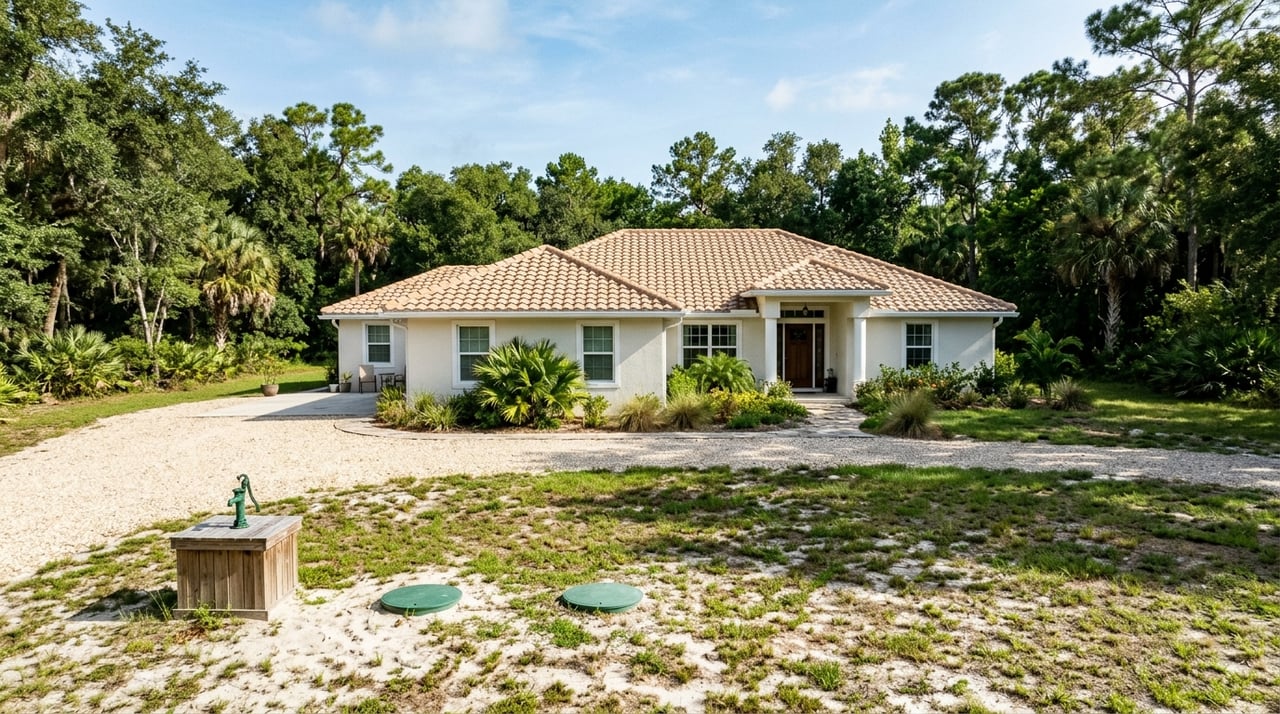
Thinking about buying acreage in Loxahatchee? The biggest surprises often are not inside the home. They are under the ground, across the lot, and in the county records. If you want more space and flexibility, this guide will help you understand wells, septic, flood zones, and zoning before you buy. Let’s dive in.
Why acreage needs extra review
In Loxahatchee, buying a larger parcel means evaluating more than the house itself. On many properties in western Palm Beach County, private wells and septic systems are part of the property’s basic infrastructure.
Palm Beach County notes that new construction in this area commonly relies on private drinking water wells and septic tanks. Those systems are reviewed before a building permit is issued, which shows how important the land and its infrastructure are to the property’s overall use.
That is why acreage buyers need to look closely at what is already in place, what has been permitted, and what the parcel can legally support. A beautiful lot can still come with practical limits if the well, septic, drainage, or zoning does not match your plans.
Wells and septic in Loxahatchee
On acreage, water and wastewater are often private systems, not public utilities. That makes due diligence especially important because these systems affect daily living, future improvements, and long-term maintenance.
Palm Beach County’s Environmental Public Health Office reviews plans for septic systems, private wells, and limited-use wells. The county says those plans must be approved before a building permit can be issued, and final approvals for wells and septic must be recorded before a certificate of occupancy is issued.
The county also reviews well-driller location plans to help keep potable wells away from potential hazards, including septic tanks or wastewater sources. For a buyer, that is a reminder that system placement matters just as much as system presence.
What to ask for on a well and septic property
Before you move forward, ask the seller for records that help confirm the system’s history and status. These documents can give you a clearer picture of whether the property has been properly permitted and maintained.
A practical document checklist includes:
- Septic permits
- Final septic approval records
- Any septic maintenance history
- Well construction permit
- Well completion report
- Any bacteriological report on file
If records are missing, that does not always mean there is a problem. It does mean you should slow down and verify the system with the appropriate county office before making assumptions.
Why well water testing matters
Florida does not require water sampling when a home is sold. Still, the Florida Department of Health strongly recommends testing private well water for bacteria and nitrate at least once per year and testing for lead every three years.
For buyers, that recommendation matters because a real estate transaction does not automatically tell you whether the water quality is acceptable for your comfort level. The state also recommends using a state-certified lab for testing.
This is especially important on rural-style parcels. The Florida Department of Health notes that bacteria and nitrate can reach groundwater through poorly maintained septic systems, livestock areas, fertilizer application, or poorly constructed wells.
If you are buying acreage with open land, animals, lawns, or multiple outbuildings, it is smart to treat water testing as a key part of your due diligence. Even if the home looks move-in ready, the well should be evaluated on its own merits.
Flood zones and drainage checks
Flood risk in Loxahatchee should be reviewed parcel by parcel. On larger lots, drainage patterns, flat terrain, and local surface conditions can all affect how water moves and where it sits after heavy rain.
Palm Beach County says flooding in the county is driven by rainfall intensity, rainfall duration, surface conditions, topography, and poor natural drainage. The county also notes that flat terrain can slow water management.
That means two nearby properties may not perform the same way during storms. You should not assume flood risk based only on a neighborhood name, nearby roads, or what a listing description says.
How to verify flood risk
FEMA’s flood maps are the official public source for flood hazard information. FEMA also states that there is no such thing as a no-risk zone, and that map areas beginning with A or V are considered high-risk zones.
Palm Beach County offers added guidance for buyers in unincorporated areas. County flood staff may help determine whether a property is in a high-risk Special Flood Hazard Area, whether repeated flooding has been reported, whether natural floodplain functions may affect the parcel, or whether an elevation certificate is on file.
The county also says flood information should always be confirmed with an official flood zone determination by a Florida licensed engineer, architect, or surveyor before purchase or construction. That step can help you make a more confident decision before closing.
Flood insurance timing matters
Palm Beach County says serious consideration should be given to flood insurance even when it is not required. The county also notes that flood insurance policies take 30 days to go into effect.
That waiting period matters. If you wait until a storm is in the forecast or until the final stage of your purchase, you may leave yourself exposed.
Zoning and land use on acreage
Acreage often attracts buyers who want flexibility. You may be thinking about extra structures, animals, a home-based business, or temporary living arrangements during construction. In Loxahatchee, those plans should always be checked against the parcel’s actual zoning and land-use rules.
In unincorporated Palm Beach County, each property has a zoning district. The county says the Future Land Use designation and zoning district must be consistent for development.
You can verify zoning through myGeoNav using an owner name, address, or property control number. The county also notes that a PCN beginning with 00 indicates unincorporated county jurisdiction, while a different prefix may mean the parcel is inside a municipality with different rules.
Uses buyers often assume are allowed
One of the biggest mistakes acreage buyers make is assuming that a large lot automatically allows every rural use they have in mind. County rules can be more specific than buyers expect.
According to Palm Beach County’s zoning guidance:
- Domesticated livestock may be allowed as an accessory use to a single-family residence if the property is in the Rural or Exurban tiers and not within a planned unit development
- Sales related to that livestock use are prohibited
- Home occupations are allowed, but they cannot be open to the public
- Some Agricultural Residential parcels with a Rural Residential future land use designation may be allowed to use a mobile home while a permanent home is being built, but only after the building permit for the single-family dwelling is obtained
These details show why zoning confirmation matters before you buy. A property may support your goals, but you should confirm the exact district, tier, and jurisdiction first.
A smart due diligence checklist
If you are buying acreage in Loxahatchee, keep your review focused on the systems and rights that shape how you can actually use the property. A simple checklist can help you stay organized.
Before you buy, confirm these items
- Ask for septic permits, final approvals, and maintenance history
- Request well construction records, completion reports, and any available water reports
- Test the well water through a state-certified lab
- Pull an official flood zone determination early in the process
- Check whether an elevation certificate is on file, if applicable
- Verify the zoning district, future land use designation, and jurisdiction
- Confirm any planned use, such as livestock, a home occupation, or temporary dwelling during construction, with county planning staff before relying on it
Taking these steps early can save time, money, and frustration later. It can also help you avoid buying a parcel that does not align with how you want to live.
Why local guidance helps
Acreage purchases have more moving parts than many standard residential transactions. You are not only evaluating bedrooms, finishes, and curb appeal. You are also reviewing infrastructure, drainage, and land-use limitations that may not be obvious during a showing.
That is where clear, responsive guidance can make a real difference. When you work with a local team that understands Palm Beach County property research, you can ask better questions early and make decisions with more confidence.
If you are exploring acreage in Loxahatchee or comparing homes with larger lots across Palm Beach County, Max C&T Realty can help you navigate the process with practical, hands-on guidance.
FAQs
What should you check first when buying acreage in Loxahatchee?
- Start with the parcel’s well, septic, flood zone, zoning district, and future land use designation, because those items directly affect how the property can be used.
Does a Loxahatchee home sale require private well water testing?
- No. Florida does not require water sampling when a home is sold, but the Florida Department of Health strongly recommends regular testing for bacteria, nitrate, and lead.
Are septic systems common on acreage in western Palm Beach County?
- Yes. Palm Beach County notes that new construction in western Palm Beach County commonly relies on private drinking water wells and septic tanks.
Can you assume livestock is allowed on any large Loxahatchee parcel?
- No. Palm Beach County says domesticated livestock may be allowed only in certain tiers and circumstances, so you should confirm the exact zoning and parcel rules first.
How do you verify flood risk for a Loxahatchee acreage property?
- Use the official FEMA flood maps, then confirm the information through an official flood zone determination by a Florida licensed engineer, architect, or surveyor before purchase or construction.
Can you run a business from a home on acreage in unincorporated Palm Beach County?
- Home occupations may be allowed, but Palm Beach County says they cannot be open to the public, so the exact use should be confirmed before you buy.