Buying a townhome in Coconut Creek can feel like finding the sweet spot between condo living and a detached house. You may want more space, a private entrance, or community amenities, but you also want to avoid surprises with fees, maintenance, and rules. The good news is that Coconut Creek offers a wide mix of townhome options, and once you know what to look for, you can shop with much more confidence. Let’s dive in.
Coconut Creek Townhomes at a Glance
Coconut Creek appeals to many buyers because it offers convenient access to major highways, airports, and the Atlantic Ocean. City budget materials also note 18 local parks plus two county parks, which adds to the appeal for buyers who want a connected, amenity-rich area.
In practical terms, townhome living here often means a low-maintenance lifestyle with more room than a typical condo. Many communities are near major roads, shopping, and daily conveniences, which can make townhomes a strong fit if you want both function and flexibility.
Townhome Style Does Not Define Ownership
One of the most important things to understand is that in Florida, a “townhome” describes the building style, not the legal structure. A property that looks like a townhome may actually be part of a homeowners’ association or a condominium association.
That matters because the legal structure affects what you own, what the association maintains, what rules apply, and which documents you need to review. In Coconut Creek, current listings include both HOA-style townhome communities and townhouse-style condo communities, so you should not judge the ownership setup by exterior appearance alone.
What HOA-Style Townhomes Usually Mean
In an HOA-style townhome community, ownership is often closer to fee-simple ownership. You usually get a private entrance and more of a house-like feel, but the association may still control things like landscaping, roofs, fencing, and exterior paint.
This setup can work well if you want more independence than a condo but do not want the full maintenance load of a detached home. Still, every community is different, so you need to confirm exactly where your responsibilities begin and end.
What Condo-Style Townhomes Usually Mean
A condo-style townhome can feel even more low-maintenance because the association may handle more of the exterior and common areas. At the same time, condo communities often come with more formal records, resale disclosures, and tighter rules on some exterior changes.
If you are looking at a condo-style townhome in Coconut Creek, pay close attention to association financials, reserves, and any building-related studies that apply. Those details can affect both your monthly cost and your long-term planning.
Layouts and Features You May See
Coconut Creek townhomes come in a broad range of sizes and ages. Current examples range from about 1,182 to 2,132 square feet, with many in the 2 to 3 bedroom and 2.5 to 3 bath range.
You will also see a mix of older 1980s construction and newer 2000s to 2016-era homes. That means two similarly sized townhomes can feel very different depending on renovations, layout, and community upkeep.
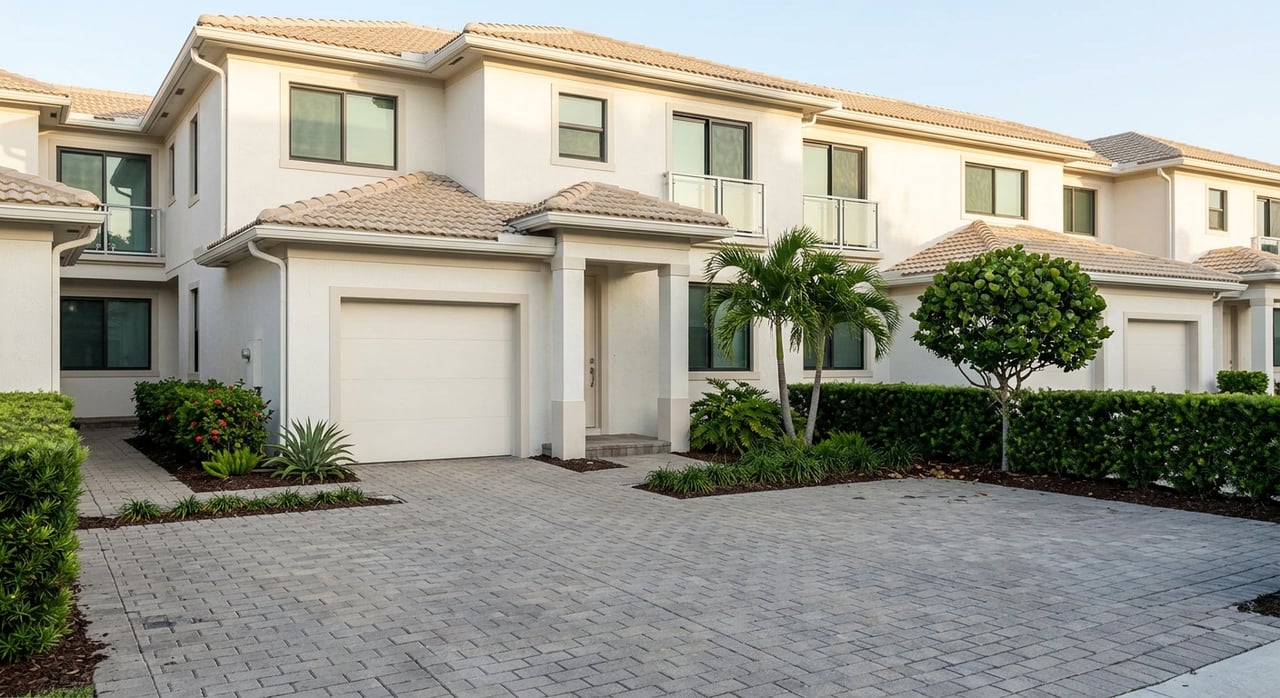
Many current listings feature two-story floor plans with the main living area downstairs and bedrooms upstairs. Patios, balconies, fenced outdoor areas, corner-unit layouts, garages, and water views also show up in the market, depending on the community.
Fees Can Vary More Than You Expect
One of the biggest surprises for buyers is how much monthly fees can differ from one Coconut Creek community to another. Public listing examples show fees ranging from about $214 per month in one community to $592 per month in another.
That difference usually reflects what the association covers. In some communities, the monthly fee may include items like lawn maintenance, exterior painting, roof repairs, cable, internet, or certain insurance-related exterior coverage. In others, dues are lower because owners are responsible for more.
Why the Lowest Fee Is Not Always Best
A lower monthly fee can look attractive at first, but it does not automatically mean lower overall ownership cost. If the association covers fewer items, you may need to budget separately for exterior repairs or services.
On the other hand, a higher fee may support a more predictable monthly budget if it includes major maintenance items and shared amenities. The key is to compare value, not just the dollar amount.
Amenities Can Change the Experience
Coconut Creek townhome communities can be much more than rows of attached homes. Public listings mention features such as pools, gyms, tennis courts, spas, theaters, walking paths, playgrounds, and rentable activity rooms.
If amenities matter to you, make sure you evaluate how often you will actually use them. A community with strong amenities may justify a higher fee, but only if those features support the lifestyle you want.
Maintenance Responsibilities Need a Close Look
Before you buy, ask exactly who maintains the roof, exterior walls, patio, fence, landscaping, windows, and doors. This is one of the clearest ways to understand whether a townhome will feel truly low-maintenance or simply maintained in a different way.
The answer may vary widely between communities, even when the homes look similar. A well-informed buyer treats the maintenance split as part of the property itself, not as a small detail to review later.
Reserves and Assessments Matter
Association finances deserve real attention when you buy a townhome in Coconut Creek. Florida associations are required to maintain records, adopt annual budgets, and complete financial reporting, and those records can tell you a lot about the health of the community.
You should ask whether reserves are funded and whether any special assessments are pending. This is especially important in communities where the association handles major exterior work or shared amenities, since underfunded reserves can lead to higher future costs.
Extra Condo Questions to Ask
If the townhome is legally a condominium, ask for the resale disclosure package and review the financial information carefully. Florida condo law requires detailed documents, and those documents can help you understand rules, budgets, and building obligations before closing.
For residential condominium buildings that are three stories or higher, Florida requires a structural integrity reserve study at least every 10 years after creation, and reserve budgets must include certain major components. If the building has fewer than three habitable stories, that specific requirement does not apply.
Parking, Pets, and Rental Rules
Townhome living often comes with community rules that affect daily life. Before you make an offer, confirm what parking is deeded, assigned, guest-only, or otherwise restricted.
You should also review pet rules, including limits related to number, weight, breed, or approval requirements. If you may rent the property in the future, ask whether the community allows rentals, whether there is a waiting period, and whether a minimum lease term applies.
Exterior Changes and Practical Restrictions
Some buyers assume they can make simple exterior updates after closing, but that is not always the case. Ask whether there are restrictions on exterior changes, hurricane shutters, trucks, commercial vehicles, or EV charging.
These rules can shape your day-to-day ownership experience more than you might expect. It is much better to understand them early than to discover them after you move in.
Townhome vs Condo vs Single-Family
If you are deciding between property types, it helps to think in terms of tradeoffs. A condo usually offers the most shared maintenance, but it may also come with more association oversight and less control over the exterior.
A townhome often gives you more space and a more private, house-like layout while still reducing yard work and some maintenance duties. A single-family home usually gives you the most autonomy, but it often comes with more upkeep, more exterior responsibility, and fewer shared amenities.
In Coconut Creek, that decision often comes down to how much privacy, control, and maintenance responsibility you want. The right answer depends on your budget, lifestyle, and comfort with shared rules and fees.
A Smart Buyer Checklist
Before you move forward on a Coconut Creek townhome, use this checklist during your review:
- Confirm whether the property is part of an HOA, a condo association, or a master association
- Ask what the monthly fee covers
- Review how often the fee has increased
- Ask whether another increase is expected
- Check whether reserves are funded
- Ask whether any special assessments are pending
- Confirm who maintains the roof, exterior, patio, fence, windows, doors, and landscaping
- Review parking rules and guest parking availability
- Check pet rules and approval requirements
- Ask about rental restrictions, lease terms, and waiting periods
- Review any restrictions on exterior changes, shutters, vehicles, or EV charging
These questions help you compare communities clearly and avoid hidden costs.
Why Local Guidance Helps
Because Coconut Creek townhomes can look similar while operating very differently, local guidance can save you time and stress. Two properties with similar square footage or price points may have very different fees, maintenance obligations, and association rules.
When you understand those details early, you can focus on homes that truly fit your goals. That makes your search more efficient and helps you make a stronger decision when the right property appears.
If you are planning to buy a townhome in Coconut Creek, working with a local team can help you sort through community differences, compare real carrying costs, and move forward with clarity. Connect with Max C&T Realty for hands-on guidance as you explore your options.
FAQs
What should you expect from townhome fees in Coconut Creek?
- Monthly fees can vary widely, with public listing examples ranging from about $214 to $592 per month depending on what the association maintains and which amenities are included.
How can you tell if a Coconut Creek townhome is an HOA or a condo?
- You need to review the declaration, bylaws, and association documents because the building style alone does not tell you the legal ownership structure.
What features are common in Coconut Creek townhomes?
- Many current examples include two-story layouts, 2 to 3 bedrooms, 2.5 to 3 baths, patios or balconies, fenced outdoor areas, garages, and access to shared amenities.
What questions should you ask before buying a townhome in Coconut Creek?
- Ask what the fee covers, who handles maintenance, whether reserves are funded, whether special assessments are pending, and what rules apply to parking, pets, rentals, and exterior changes.
How is a townhome different from a single-family home in Coconut Creek?
- A townhome usually offers less yard work and more shared amenities than a single-family home, but it also comes with shared walls, monthly fees, and community rules.